
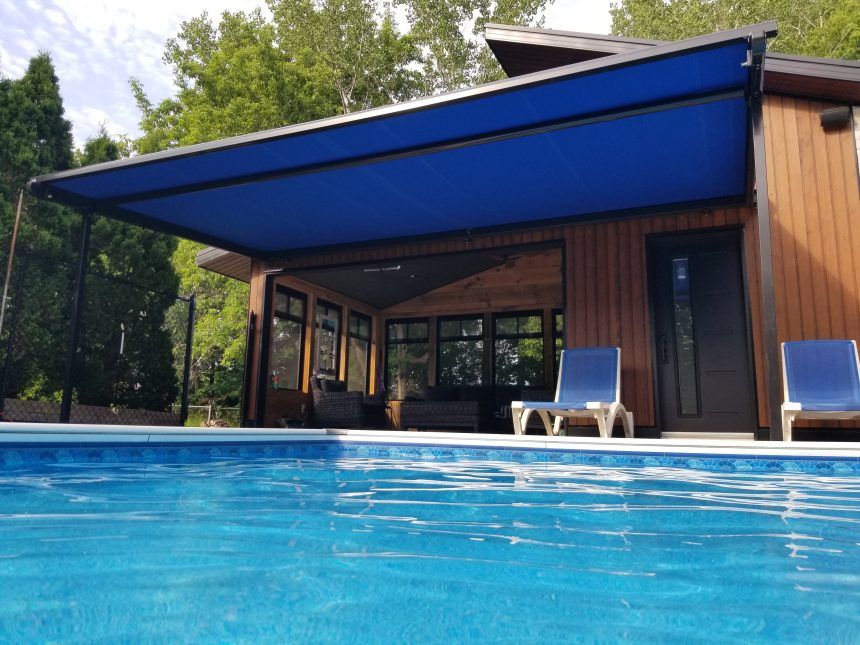
Awning sellers like their numbers to be large. Some can quote you savings that would justify having almost no air conditioning. The real number, however, is likely smaller but still sizable, though you need to consider which windows are shaded, what glass they have, and the fabric's performance. These factors also apply to retractable patio awnings. Sunlight through glass is a major source of summer heat in a home. Blocking it outside the window works far better than blocking it inside. Real savings depend on how much glass you shade, your existing glazing, and local electricity prices.
This article explains where the heat comes from, what published studies have found, and where you're likely to save. It concludes with a method of checking any vendor's claims.
People Also Ask
Do Awnings Really Lower Air Conditioning Costs?
Yes, when they shade windows that get direct sun. Less sunlight through the glass means the air conditioner runs less.
Are Outdoor Awnings Better Than Indoor Blinds for Heat?
Yes, because an awning prevents the sun's rays from reaching the glass, while indoor blinds can only reduce heat after it enters the room.
Which Windows Benefit Most From an Awning?
West- and south-facing windows and patio doors are ideal for awnings. They receive the most intense summer sunshine.
How Solar Heat Gain Actually Enters a Home
Sunlight passes through glass and lands on floors, furniture, and walls. Those surfaces absorb it and release it as heat. That heat can't escape back through the glass easily, so the room warms up. The air conditioner then has to remove it, increasing the cooling load.
Walls and roofs also gain heat, but more slowly, through insulation. Windows and glass doors let solar energy straight in. That's why a sunny patio door can heat a room faster than the wall around it.
Why Exterior Shading Beats Interior Blinds on Heat
Interior blinds and curtains reduce solar heat gain after the sun passes through the glass; the heat is already in the house. Exterior shading prevents solar heat gain before it enters the house.
The Department of Energy's numbers tell the story. Fully closed, highly reflective interior blinds reduce heat gain by 45%, whereas awnings reduce heat gain by up to 65% on south-facing windows and 77% on west-facing windows.
An awning company noted another issue with interior shading. According to the research team, when combined with energy-efficient windows, interior shades were either ineffective or created thermal stresses on the glass. The researchers recommended using exterior shading devices on houses that need to reduce summer cooling loads.
Which Windows and Doors Let In the Hottest Sun
Orientation determines how much solar gain a window can contribute in summer. West-facing windows admit the strongest rays from the low angle of a summer afternoon.
South-facing windows are hit by high sun that a small awning can block.
East-facing windows warm the house on a cool morning.
North-facing windows add minimal summer heat.
Sliding patio doors merit particular attention because they are large windows, typically have glass on all sides, and are often glass doors on a south- or west-facing wall. That makes west-facing glass the primary candidate for an awning.
A single retractable awning above a patio door can provide more coverage than multiple smaller window awnings.
How Window Glass Affects Awning Savings
A window's solar heat gain coefficient, or SHGC, is the share of incoming solar heat it lets through. It runs from 0 to 1.
A window with a high SHGC lets in more summer heat, so an awning has more to remove. A newer low-gain window already blocks some of the sun, leaving less for the awning to stop. Window labels and supplier specification sheets often list the SHGC.
Estimating the Shaded Area That Matters
Savings scale with the glass an awning actually shades, not with the awning's size. A large awning over a deck with no windows behind it saves nothing on cooling. A modest one over a west patio door can make a real difference.
A quick estimate takes three steps:
- List each window and door the awning will cover, with its compass direction.
- Note how much of each pane sits in shade at mid-afternoon in July.
- Weight west and south glass heavily, and east glass less.
The CCHT awnings covered only about the upper half of each south window. That partial coverage still produced the 18% cut in cooling energy.
How Fabric Color and Weave Affect Cooling
The Department of Energy recommends using opaque, tightly woven awning fabric. They also note that lighter-colored fabric reflects more light. A tight fabric weave blocks more direct rays and casts more shadow on the glass. Darker materials tend to absorb more heat but reduce glare underneath the awning canopy.
Awnings also need proper ventilation. The DOE notes that mounting an awning to enclose the window on three sides may cause issues with hot-air dissipation. Retractable lateral arm awnings let the sides open so heat can escape.
For UV protection, Canadian Shade lists a UV block of 93% to 97% on the Sunbrella fabric used in its Palladio Semi Cassette Awning, depending on color.
Where the Savings Show Up in Cooling Load, Comfort and Fade Protection
The cooling load is the obvious consideration. By reducing solar penetration through the glass, awnings reduce the air-conditioning system's workload.
Comfort is the second benefit. The study also found that, in most cases, temperatures stayed much closer to the thermostat setting, even in rooms with no awnings. This can be crucial in a west-facing living room that becomes oppressively hot by late afternoon, even with the air conditioning running.
Fade protection is the third benefit, and many homeowners don't consider it. Direct sunlight causes fading and deterioration of flooring, rugs, and upholstery near patio doors. By shading the glass, awnings reduce the amount of damaging UV rays that reach these furnishings.
What a Retractable Awning Will Not Do
An honest estimate also accounts for the limits.
- It won't fix heat from poor insulation or air leaks around windows.
- It won't stop very low morning or evening sun, which slides underneath. A drop valance helps.
- It saves nothing while retracted. A sun sensor extends it automatically when sun hits the house.
- It shouldn't stay out in winter. The DOE notes awnings can increase heating energy use, so retracting them lets in winter sun.
- It reduces daylight. The CCHT team found shaded rooms spent more time below recommended light levels.
Realistic Expectations for a Canadian Cooling Season
Canadian cooling seasons are short, so the dollar savings are modest.
A worked example shows the scale. For illustration, assume an air conditioner uses 1,000 kWh over one summer. At Ontario's Time-of-Use on-peak price of 20.3 cents per kWh, that's about $203 in electricity. An 18% cut, matching the CCHT result, saves roughly $37 a season.
That figure is before delivery charges and the Ontario Electricity Rebate. The Ontario Energy Board resets prices every November 1, so the numbers will shift. Homes with more west-facing glass, older windows, or heavy afternoon air conditioning will save more. Homes with low-gain glass and mature tree cover will save less.
The bigger payoff is often comfort and a usable patio on hot afternoons. Energy savings work best as a bonus, not the main reason to buy.
How to Compare Claims Between Suppliers
A credible claim names its source and its conditions. Four questions separate solid claims from marketing:
- Which study produced the number, and where was it done?
- Which windows were shaded, and which direction did they face?
- Is the figure a cut in solar heat gain or in total cooling energy?
- Does it account for the glass already in the house?
The third question catches most inflated claims. A 77% cut in solar heat gain through one window isn't a 77% cut in the cooling bill. The DOE figure measures heat through shaded glass. The CCHT figure measures the whole air conditioner.
Checking the Savings Before Buying
The surest way to start evaluating solar heat gain during installation is to look at the windows. Count how many sunlit panes of glass the awning will shade, find those panes' solar heat gain coefficient, and determine the glass's orientation. These steps turn a homeowner's vague statement about solar heat gain into a number.
Canadian Shade reviews which windows an awning will shade during its free home assessment.
Frequently Asked Questions
Do Light or Dark Awning Colors Keep a House Cooler?
Lighter colors reflect more sunlight. Darker colors absorb more heat but cut glare under the awning.
Should an Awning Stay Out All Day in Summer?
It only saves energy while it shades sunny windows. A sun sensor can open it automatically, and a wind sensor can close it during strong gusts.
Do Awnings Help With Heating Costs in Winter?
No. Closing them in winter lets the sun warm the house, which helps with heating.
Can an Awning Replace Air Conditioning?
No. It reduces the heat coming in, so the air conditioner works less, but it doesn’t replace it.
Does an Awning Need to Cover the Whole Window?
Not always. Shading even the top of a sunny window can noticeably reduce how much heat gets inside.